Machine Learning's Role in Detecting Irregular Patterns Across Global Digital Wagering Platforms
Noah Butler · Oct 11, 2026
Machine Learning's Role in Detecting Irregular Patterns Across Global Digital Wagering Platforms
Digital wagering platforms generate vast volumes of transaction and behavioral data every second, and machine learning systems now process those streams to flag irregular patterns that range from coordinated betting syndicates to account takeovers and money laundering attempts. Researchers have trained supervised models on historical fraud cases while unsupervised algorithms scan for deviations from established user baselines, and both approaches operate in real time across major operators.
Core Machine Learning Techniques Applied to Wagering Data
Supervised classification models learn from labeled examples of past irregularities, then assign risk scores to new bets or account actions as they occur, while clustering methods group similar user sessions to surface hidden connections among accounts that share devices, payment methods, or betting timing. Neural networks process sequential data such as deposit-withdrawal cycles and in-play wager sequences, and decision trees provide interpretable rules that compliance teams can review when regulators request explanations for account restrictions.
Feature engineering remains central because raw data alone rarely reveals intent, so engineers derive variables like velocity of stakes relative to account age, geographic mismatch between IP address and registered location, and correlation between odds movement and wager size. These engineered features feed into ensemble models that combine outputs from multiple algorithms, and platforms update the ensembles weekly to reflect emerging tactics observed in different markets.
Global Deployment Patterns and Regulatory Contexts
Operators licensed in multiple jurisdictions integrate machine learning pipelines that satisfy varying data-retention and audit requirements, and regulators in Australia, Canada, and several European Union member states now request model documentation during licensing renewals. As of October 2026, several large platforms report that automated alerts trigger human review in fewer than 0.3 percent of sessions, yet those alerts account for the majority of confirmed compliance actions.
Data from the Nevada Gaming Control Board shows that machine learning tools identified over 1,200 coordinated betting rings during the 2025 calendar year, and similar systems operated by Canadian provincial operators have reduced chargeback rates linked to stolen credentials by measurable margins according to industry reports. Platforms must still maintain appeal processes because models occasionally flag legitimate high-volume bettors whose patterns simply diverge from the average user.
Types of Irregular Patterns Targeted by Detection Systems
Account takeover attempts often appear as sudden changes in device fingerprint, login geolocation, or betting style after years of consistent activity, and machine learning flags these shifts within minutes. Money laundering sequences frequently involve rapid deposit-and-withdraw cycles that avoid normal risk thresholds, while bonus abuse manifests as patterns of low-stake, high-volume play designed to clear wagering requirements across multiple accounts linked by shared identifiers.
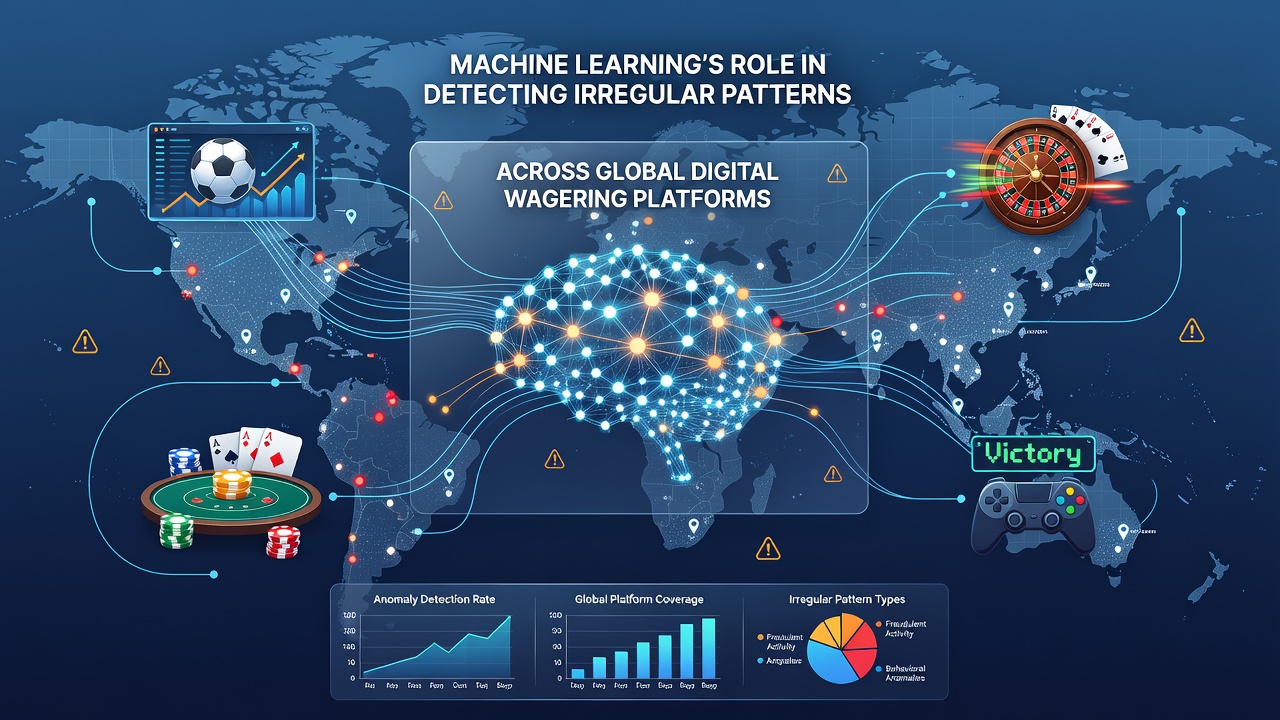
Coordinated syndicates leave traces through synchronized wager timing across unrelated accounts, and graph-based algorithms now map these relationships by treating each bettor as a node and shared attributes as edges. Researchers at several universities have published studies showing that temporal graph networks improve detection speed compared with static feature sets, and operators have begun incorporating these methods into production pipelines.
Challenges in Model Maintenance and Cross-Border Data Use
Adversarial actors continuously adapt their methods, which forces teams to retrain models on fresh examples while preserving performance on older, still-relevant cases. Privacy regulations limit the sharing of raw user data across borders, so federated learning approaches allow models to improve without moving individual records outside their original jurisdictions. Platforms also face the task of explaining opaque model decisions to users and regulators, and many now generate natural-language summaries that describe which features drove a particular alert.
Industry associations track false-positive rates across member companies, and those metrics guide the refinement of risk thresholds so that legitimate players experience minimal friction. Observers note that smaller operators often rely on third-party detection services because building and maintaining in-house systems requires specialized talent that remains in short supply.
Conclusion
Machine learning has become a standard component of compliance infrastructure on global digital wagering platforms, and its role in surfacing irregular patterns continues to expand as data volumes grow and regulatory expectations increase. Systems combine multiple algorithmic families, adapt through ongoing retraining, and operate under the scrutiny of diverse licensing authorities, yet human oversight remains essential for final decisions and appeals. Continued advances in graph analysis and privacy-preserving techniques will shape how these tools evolve through the remainder of the decade.