Demographic Trends Reshaping Participation in Digital Wagering and Entertainment Platforms
Paul Schmid · Sep 27, 2026
Demographic Trends Reshaping Participation in Digital Wagering and Entertainment Platforms
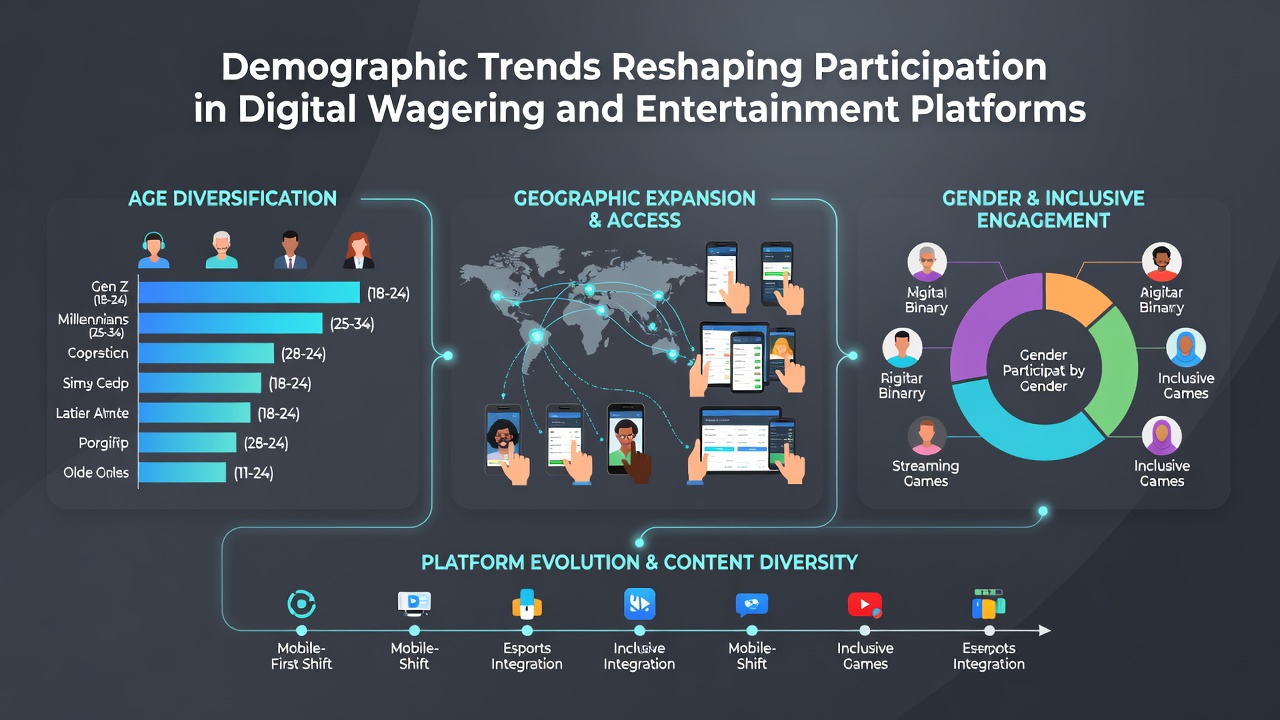
Demographic patterns continue to alter how users engage with digital wagering and entertainment platforms, and data collected through 2026 highlights several measurable shifts in user bases across multiple regions. Age distributions show younger adults maintaining higher engagement rates on mobile interfaces, while older cohorts demonstrate steadier growth in desktop-based participation. Researchers tracking these changes note that generational differences influence both platform selection and preferred game types, with evidence pointing to increased crossover between traditional sports betting and interactive entertainment formats.
Age-Based Participation Patterns
Studies from academic institutions reveal that individuals aged 25 to 34 represent the largest segment in many markets, yet participation among those 18 to 24 has accelerated since mobile applications became more accessible. Data indicates this younger group often combines short session betting with live streaming features, whereas users over 45 tend toward scheduled events and longer analysis periods. As of September 2026, industry reports document a 12 percent rise in accounts opened by adults in their early thirties compared to the previous year, driven largely by expanded legal frameworks in North American states.
Gender Distribution Changes
Women now account for a growing share of active accounts on platforms that offer both wagering and non-wagering entertainment options, according to figures released by the European Gaming and Betting Association. Participation rates among female users have increased steadily in markets where regulatory changes introduced clearer consumer protections, and this trend appears consistent across several European countries as well as parts of Australia. Observers note that product designs incorporating social features and skill-based elements correlate with higher retention among this demographic, while overall gender gaps in registration continue to narrow in jurisdictions that expanded access during 2025.
Geographic and Income Variations
Urban populations in high-income brackets show stronger adoption of premium subscription models, yet lower-income groups participate primarily through free-to-play entry points that transition into real-money options. Research conducted across Canadian provinces found that residents in metropolitan areas maintain account activity levels nearly double those recorded in rural regions, a pattern attributed to differences in internet infrastructure and device ownership. American Gaming Association statistics further illustrate how state-level legalization correlates with broader income diversity among participants, particularly in markets that introduced mobile-only licensing.
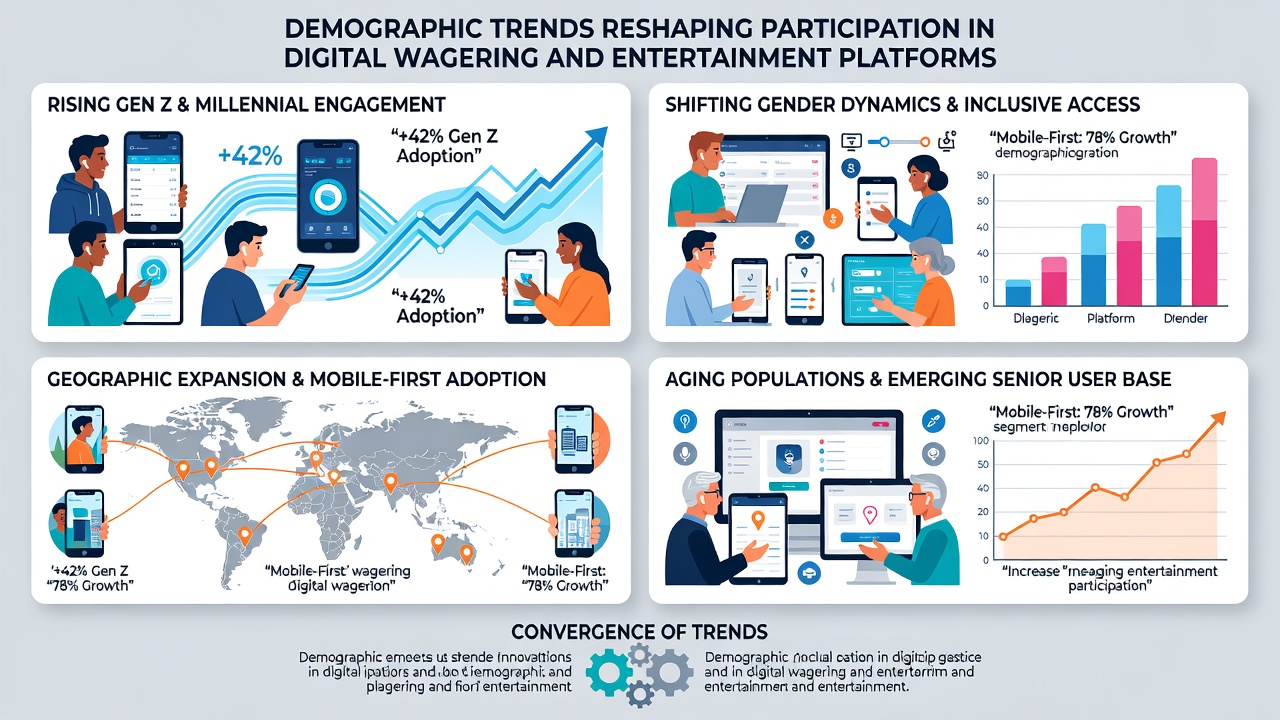
Emerging markets in Southeast Asia and Latin America have contributed additional layers to these trends, with data showing rapid uptake among middle-income users who access platforms via smartphones. Government agencies in several of these regions report that regulatory clarity introduced in 2025 led to measurable increases in verified accounts, especially among users between 30 and 40 years old. Those who study cross-border participation observe that currency conversion tools and localized payment methods support continued growth without requiring changes to core platform architecture.
Device and Access Method Influences
Device preferences also intersect with demographic variables, as tablet usage remains more common among older participants while smartphone sessions dominate among younger cohorts. Analysts examining login data note that multi-device users tend to maintain higher lifetime activity, a finding consistent across both established and newly regulated markets. Income levels further shape access patterns, with higher earners showing greater willingness to engage in live dealer formats that require stable connections and higher data usage.
Conclusion
Demographic data collected through September 2026 demonstrates that participation in digital wagering and entertainment platforms reflects ongoing changes in age, gender, geography, and income distribution. Regulatory developments, technological accessibility, and product adaptations continue to interact with these variables, producing measurable shifts in user composition across different jurisdictions. Tracking these patterns provides a factual basis for understanding how platforms evolve alongside their audiences.